
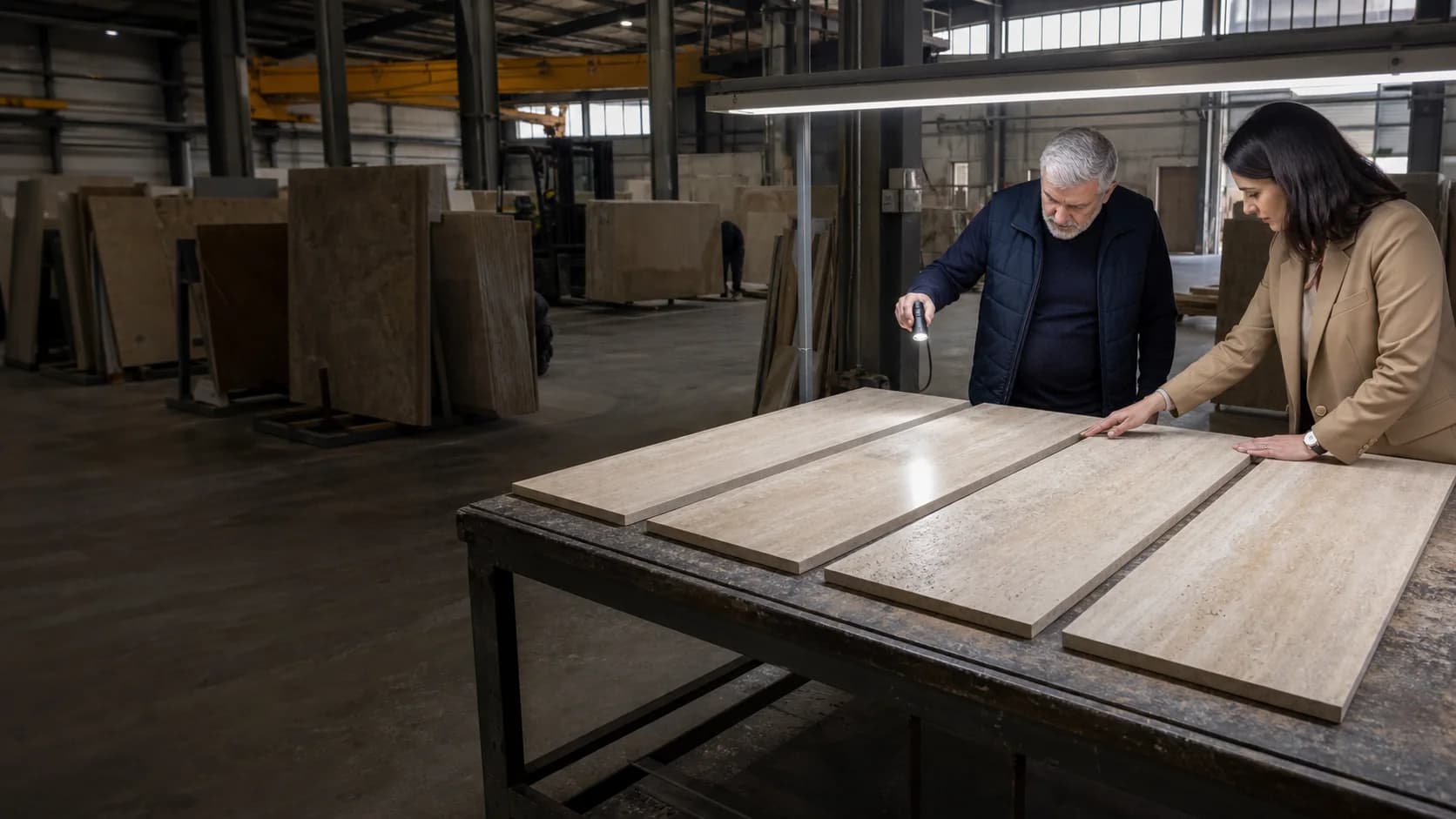
From smooth honed to rugged bush-hammered, each travertine finish creates a different aesthetic and performance profile. Find the perfect finish for your project.
Last updated: · Reviewed by Sezai Suda
Quick Facts About Finishes
All Finishes Explained
Each process changes the stone's appearance, texture, and care profile. Compare the options before specifying flooring, wall cladding, or exterior work.
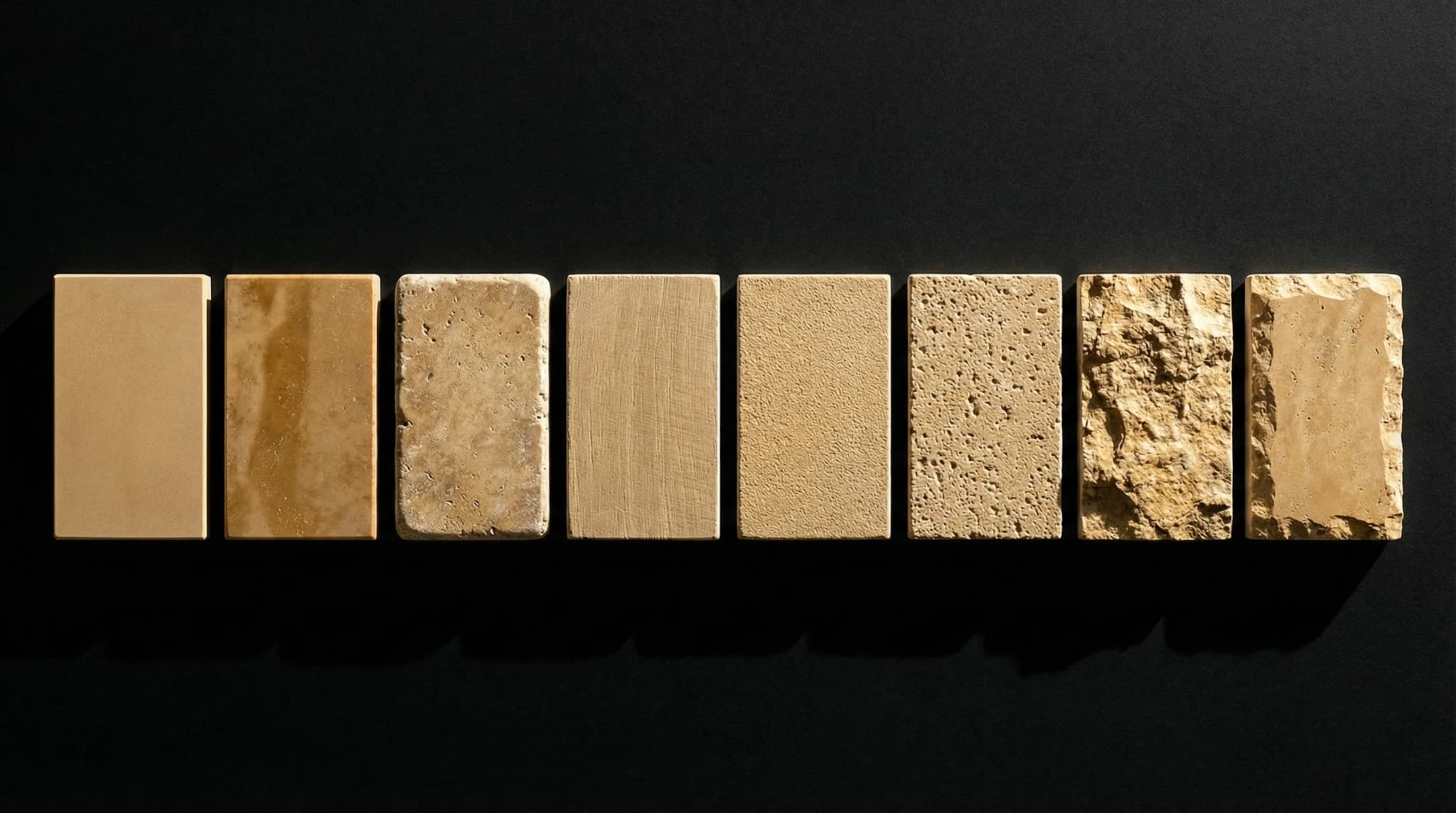
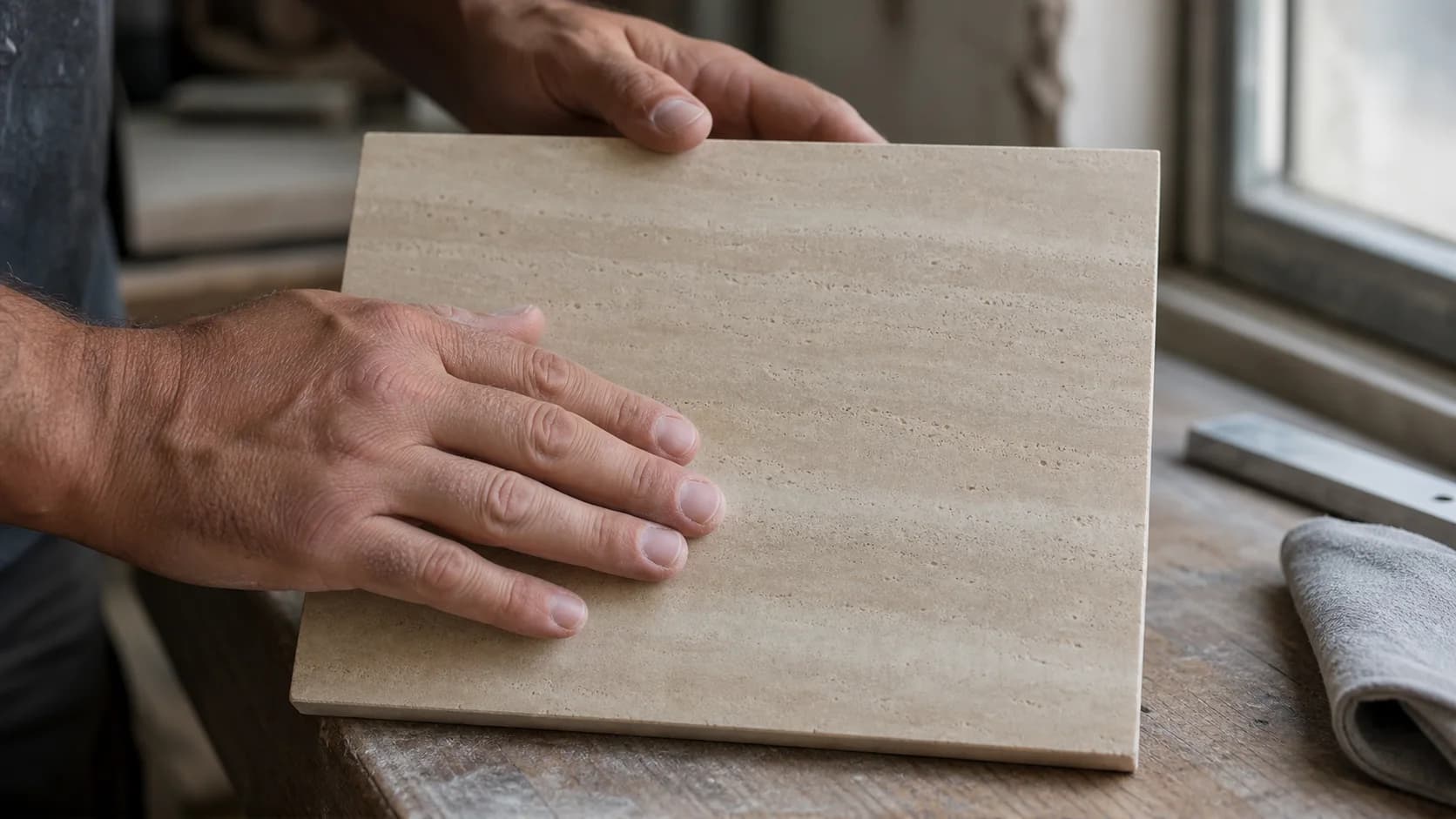
Achieved by grinding the stone with progressively finer abrasives and stopping before the polishing stage. Honed travertine has a smooth, matte surface with low glare. It tends to make light wear less conspicuous than a highly polished face, which is why it is a common candidate for residential and commercial travertine flooring.
Best for: Interior floors, bathrooms, kitchens, lobbies
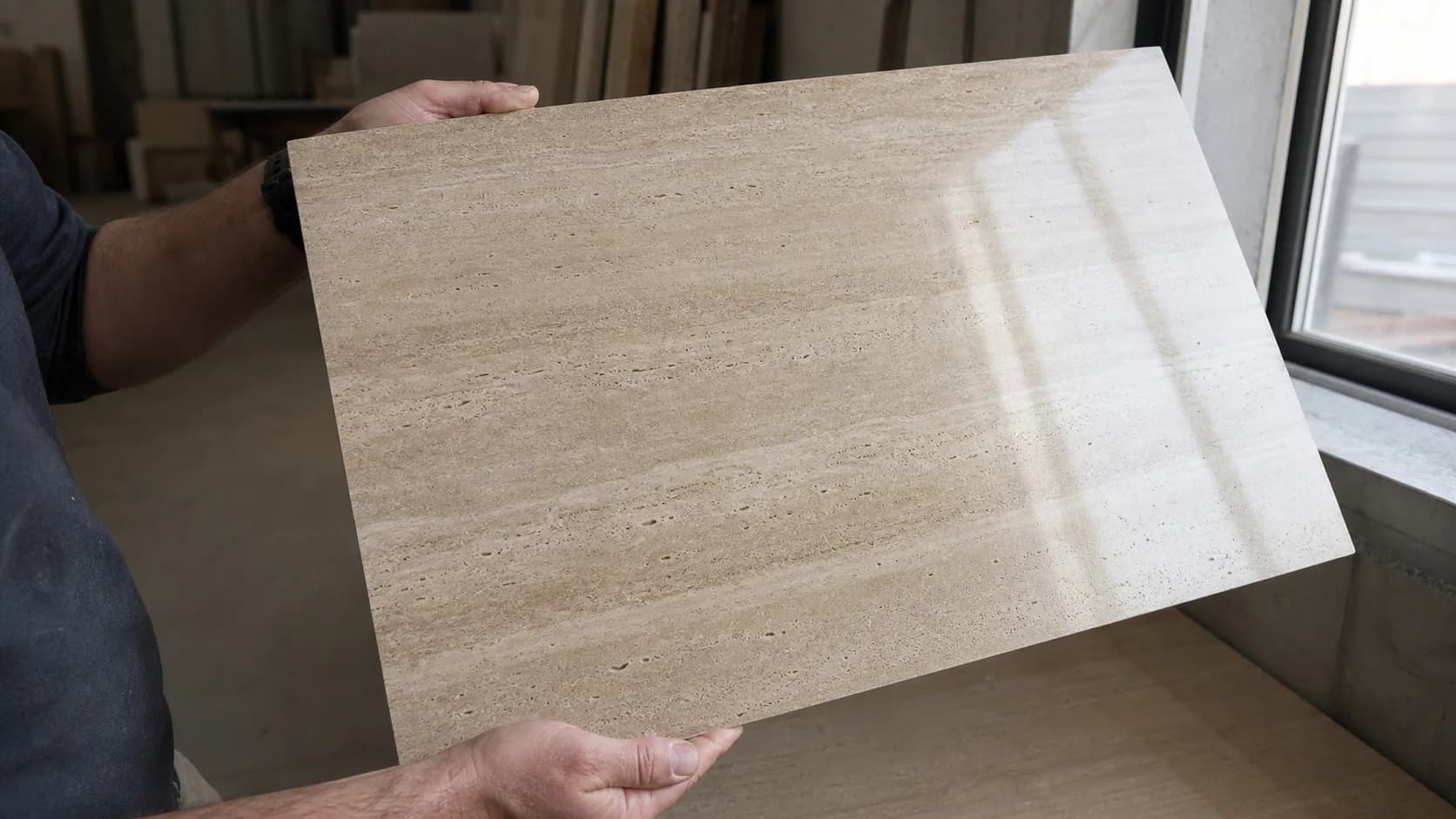
Diamond-polished to a warm, reflective sheen that enhances the stone's natural veining and color depth. Note that travertine's natural porosity means it achieves a warm glow rather than a mirror-like reflection (unlike marble). Polished surfaces are more susceptible to showing scratches and require more careful maintenance.
Best for: Feature walls, reception areas, formal living spaces
Created by brushing the stone surface with wire or nylon brushes, softening the face and creating a gently textured, aged appearance. The result is a rustic, time-worn aesthetic. The texture can affect friction, but the exact finished product still needs project-specific slip testing.
Best for: Rustic interiors, country homes, boutique hotels
Stone pieces are placed in a drum with abrasive materials until edges are rounded and surfaces develop a naturally worn look. Tumbled travertine pavers are frequently considered for patios and pool surrounds. Their softened face and irregular edges suit Mediterranean designs; wet-use suitability must be verified on the supplied product.
Best for: Outdoor pavers, pool areas, patios, Mediterranean designs
High-pressure abrasive media is directed at the stone surface, creating a uniformly rough, matte texture. It is often evaluated for ramps, wet zones, and exteriors where a pronounced texture is useful. Confirm the specified finish with a sample and the required slip test.
Best for: Ramps, wet areas, commercial stairways, building exteriors
A pneumatic or hand-held bush hammer strikes the stone repeatedly, creating a deeply textured, cratered face. It is a strong candidate for exposed and high-traffic exterior work, but texture alone does not prove a slip classification. Specify the exact product, sample, and test method.
Best for: Heavy traffic exteriors, public walkways, anti-slip zones
Side-by-Side Comparison
Use this table to shortlist finishes, then confirm the supplied product with samples, test data, and a project quote.
| Finish | Slip Resistance | Maintenance | Best Use | Pricing Tendency |
|---|---|---|---|---|
| Honed | Test exact product | Low | Interior floors & walls | Often baseline |
| Polished | Smooth; test exact product | Medium-High | Feature walls, formal areas | Extra processing |
| Brushed / Antiqued | Textured; test exact product | Low | Rustic interiors, boutique spaces | Extra processing |
| Tumbled | Textured; test exact product | Low | Outdoor pavers, pools | Format-dependent |
| Sandblasted | Textured; test exact product | Low | Ramps, wet areas, exteriors | Extra processing |
| Bush-Hammered | Deep texture; test exact product | Very Low | Heavy traffic, anti-slip zones | Extra processing |
Finish labels are not universal performance ratings. Slip resistance and pricing vary with the stone lot, fill, format, thickness, production route, test method, and order quantity.
Specification Sources
Authoritative stone guidance treats finish selection as a product- and project-specific decision. Use recognized terminology, request representative samples, and test the exact finished material when safety is material.
Share your stone, format, and project exposure so we can confirm a representative sample set
Choosing a Finish
Consider these four factors when selecting a travertine finish for your project.
For living rooms, kitchens, and bathrooms, honed finish is the go-to choice. It offers a clean, contemporary look with minimal maintenance. Polished works well for accent walls and low-traffic formal areas.
Tumbled, brushed, sandblasted, and bush-hammered finishes are common exterior candidates. Select from the exact stone and format, then verify wet-use performance, freeze-thaw exposure, drainage, and maintenance requirements.
For hotel lobbies, restaurants, and retail spaces, honed or brushed finishes balance aesthetics with durability. They hide wear and scratches better than polished while maintaining a professional appearance.
Polished travertine on feature walls or as countertop surfaces creates elegant focal points. Combine with honed flooring for a sophisticated interior where the wall finish contrasts with the floor.
Our stone specialists can shortlist viable finishes against your application and specification
Our Collection
Browse current Turkish travertine varieties, then confirm finish and sample availability for your format and quantity.
Common Questions
Frequently asked questions about travertine surface finishes and their applications.
Explore our Turkish travertine collection, then send the format, quantity, application, and target finish for a production check.
Finish and sample availability is confirmed against your project specification.
Project enquiry
Share the material, format, quantity, destination, and timing.
What helps us answer accurately
Stone · Format and finish · Quantity · Destination city or port
You can expect a reply within
One business day
Need a quick answer? Ask Selim in the chat.

