

The finish changes how the same travertine looks, feels, wears, and performs in use. This guide compares honed and polished surfaces and shows what to verify before specifying either one.
20+
Years Experience
5+
Finish Options
2
Finishes Compared
100%
Direct from Turkey
Last updated: · Reviewed by Sezai Suda
Quick Answer
Honed travertine has a smooth, low-sheen surface that usually shows wear less readily and is commonly considered for floors. Polished travertine has a higher sheen that deepens colour and reflection, so it is often chosen for walls and controlled dry interiors. Finish names alone do not prove slip resistance: wet or exterior areas need a test report for the exact stone, filler, and finish supplied. Both options are available across our Turkish travertine collection. The right finish depends on use, testing, and maintenance.
Understanding the Finishes
Both finishes start from the same raw travertine block. The difference lies in how the surface is processed after cutting, which determines appearance, texture, slip resistance, and suitability for specific applications.
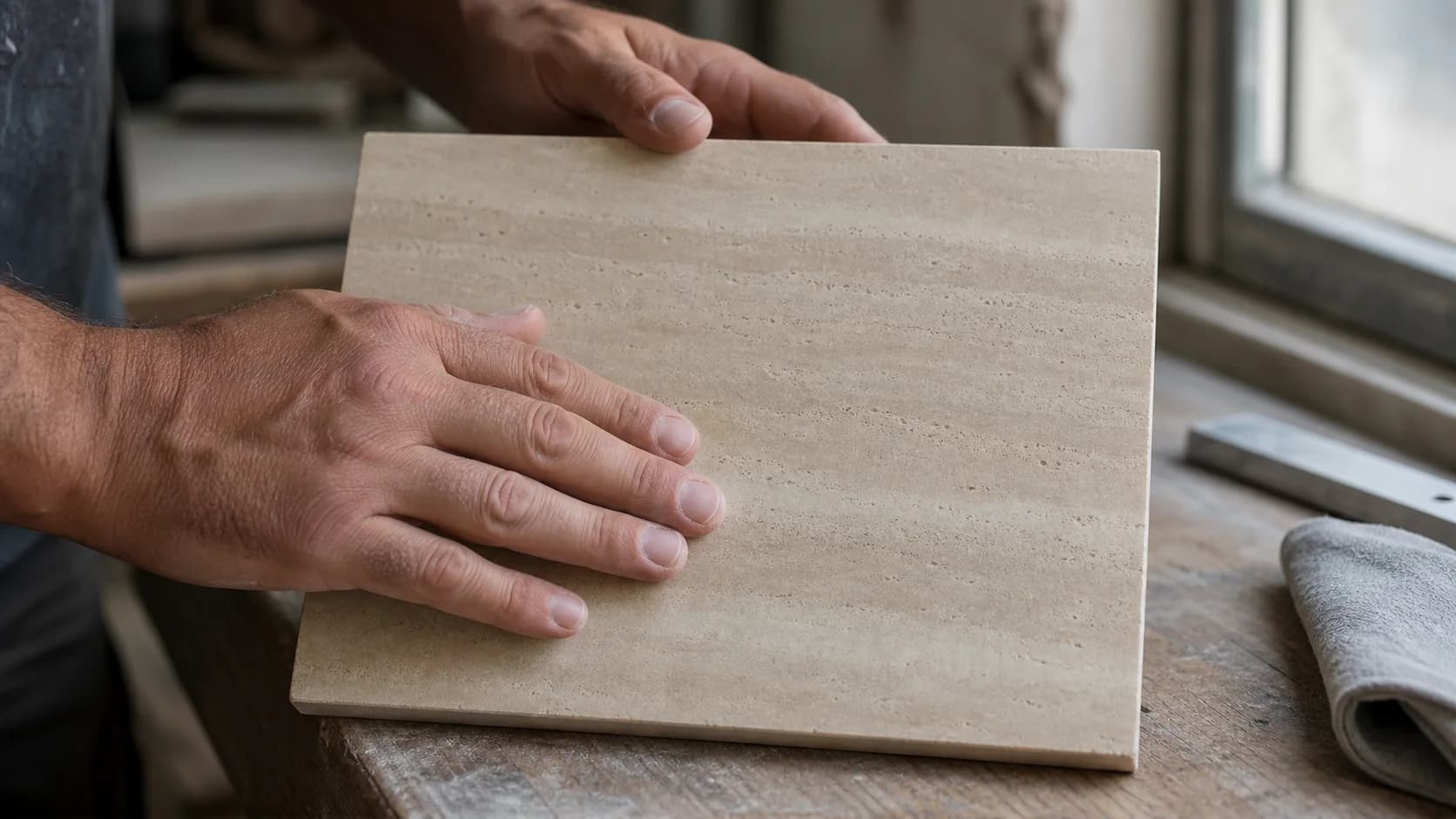
Honed travertine is ground with progressively finer abrasives and stopped before a high-polish stage. The result is a smooth, low-sheen surface with a matte or satin appearance. Colour and veining read more softly than on a polished face, and minor wear is generally less conspicuous. For floors or wet areas, approve the exact finish sample and verify the required slip-performance classification for the project.
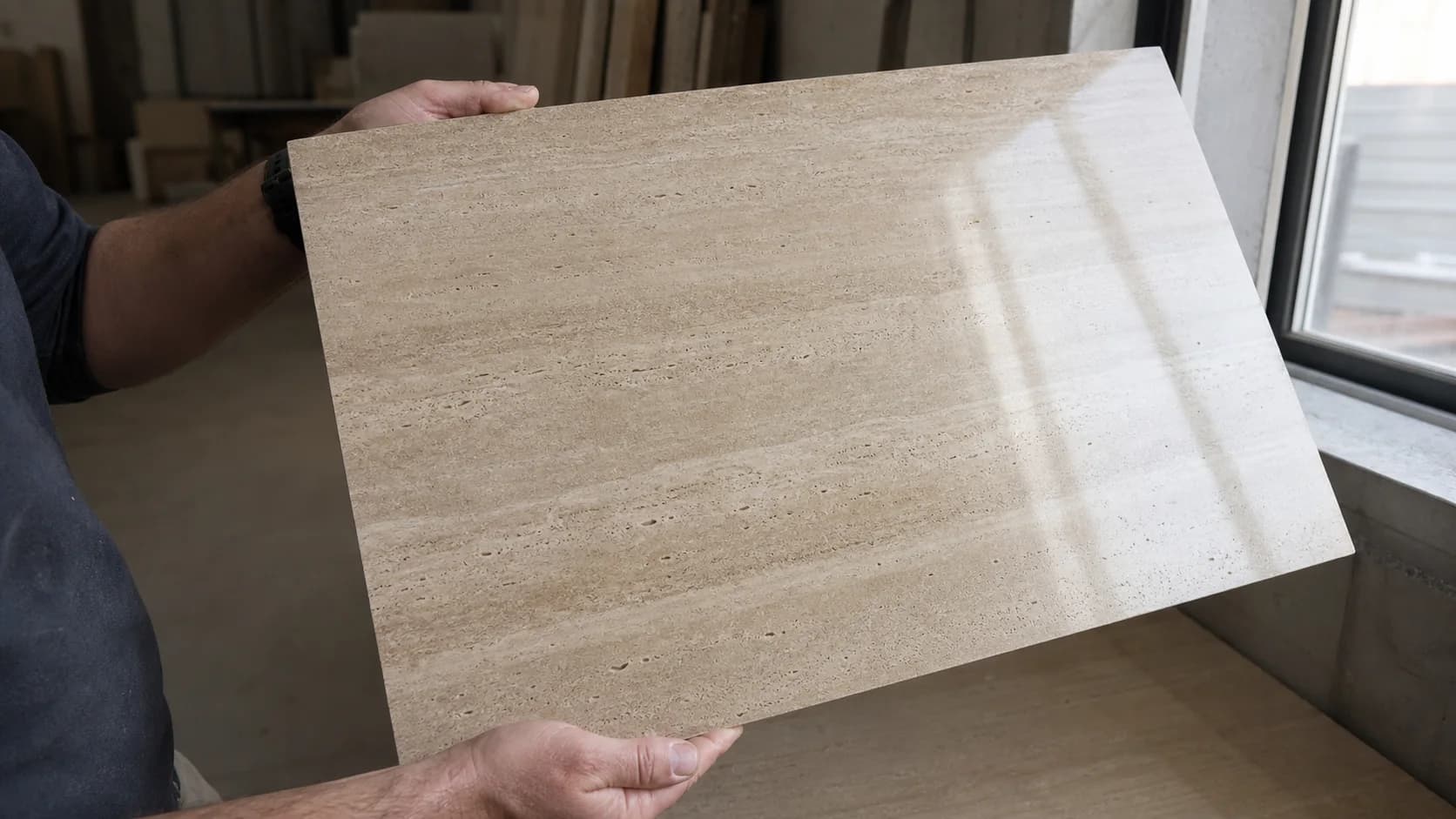
Polished travertine is ground through finer abrasive stages to produce a higher-sheen, more reflective face. The finish can deepen apparent colour and make veining more prominent. It is commonly used on walls, feature surfaces, and dry interiors where reflected light is part of the design. On trafficable surfaces, suitability must be established with product-specific testing rather than the word polished alone.
Processing Note
Both finishes are normally applied at the factory, but a specialist can re-hone or re-polish installed stone if there is enough material and site access. Restoration changes the surface and may expose filler or variation, so approve the intended finish before production and keep a control sample for quality checks.
Visual & Tactile Differences
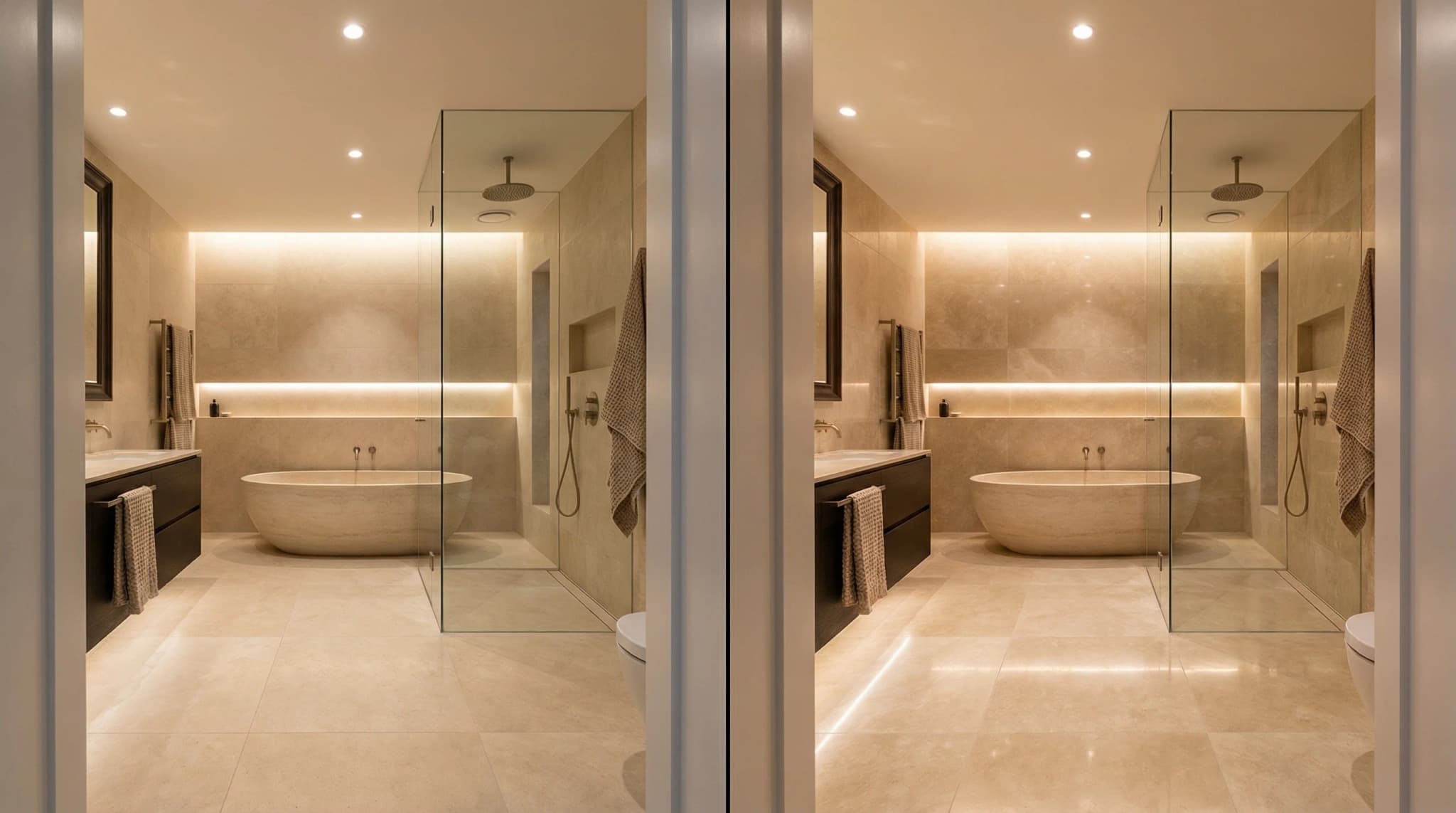
The table below compares the visual and tactile characteristics of both finishes side by side.
| Aspect | Honed | Polished |
|---|---|---|
| Sheen Level | Matte / satin (low reflectivity) | Higher sheen with stronger light reflection |
| Colour Depth | Slightly muted, natural tones | Deeper, more saturated colours |
| Surface Texture | Smooth but with subtle grain feel | Glass-smooth, no tactile grain |
| Scratch Visibility | Scratches less visible (matte hides marks) | Scratches highly visible (gloss shows marks) |
| Design Aesthetic | Warm, organic, understated elegance | Luxurious, dramatic, statement-making |
| Light Reflection | Diffuses light softly, reduces glare | Reflects light sharply, amplifies brightness |
| Stain Visibility | Stains more visible on matte surface | Stains less visible but etching shows more |
Design context: honed travertine supports quieter, tactile interiors, while polished travertine suits spaces where colour depth and reflected light are intentional. Neither is universally more premium; the stronger choice is the finish that matches the use, lighting, sample approval, and maintenance plan.
Application Guide
The right finish depends on where you install it. Below we compare honed and polished travertine across six common applications, with an honest recommendation for each.
Honed travertine is often the practical starting point for interior flooring because its lower sheen tends to make everyday wear less visible. Polished floors can deliver stronger colour and reflection but show traffic patterns and etching more readily. For either finish, specify the exact supplied surface, intended conditions, and any required slip-test classification before approval.
For bathroom floors, start with a lower-sheen finish and require a wet-use classification or test report for the exact product. A polished wall can add colour depth without becoming a walking surface. Drainage, slope, joints, cleaning products, and local code remain part of the safety decision; a finish label cannot replace the full specification.
For pool decks, review textured options such as tumbled or brushed finishes before approving a honed or polished surface. Exterior wet suitability must be declared or tested for the exact product, and the design must also address slope, drainage, barefoot use, contaminants, and maintenance. Request matched samples from our travertine collection for the project mock-up.
For kitchen countertops and backsplashes, honed travertine is more practical because acid etching (from citrus, vinegar, wine) is far less visible on a matte surface. Polished travertine shows every etch mark as a dull spot in the gloss. Both finishes need sealing. Honed also hides minor scratches from kitchen use. Polished travertine works well for kitchen backsplashes where spills are less frequent.
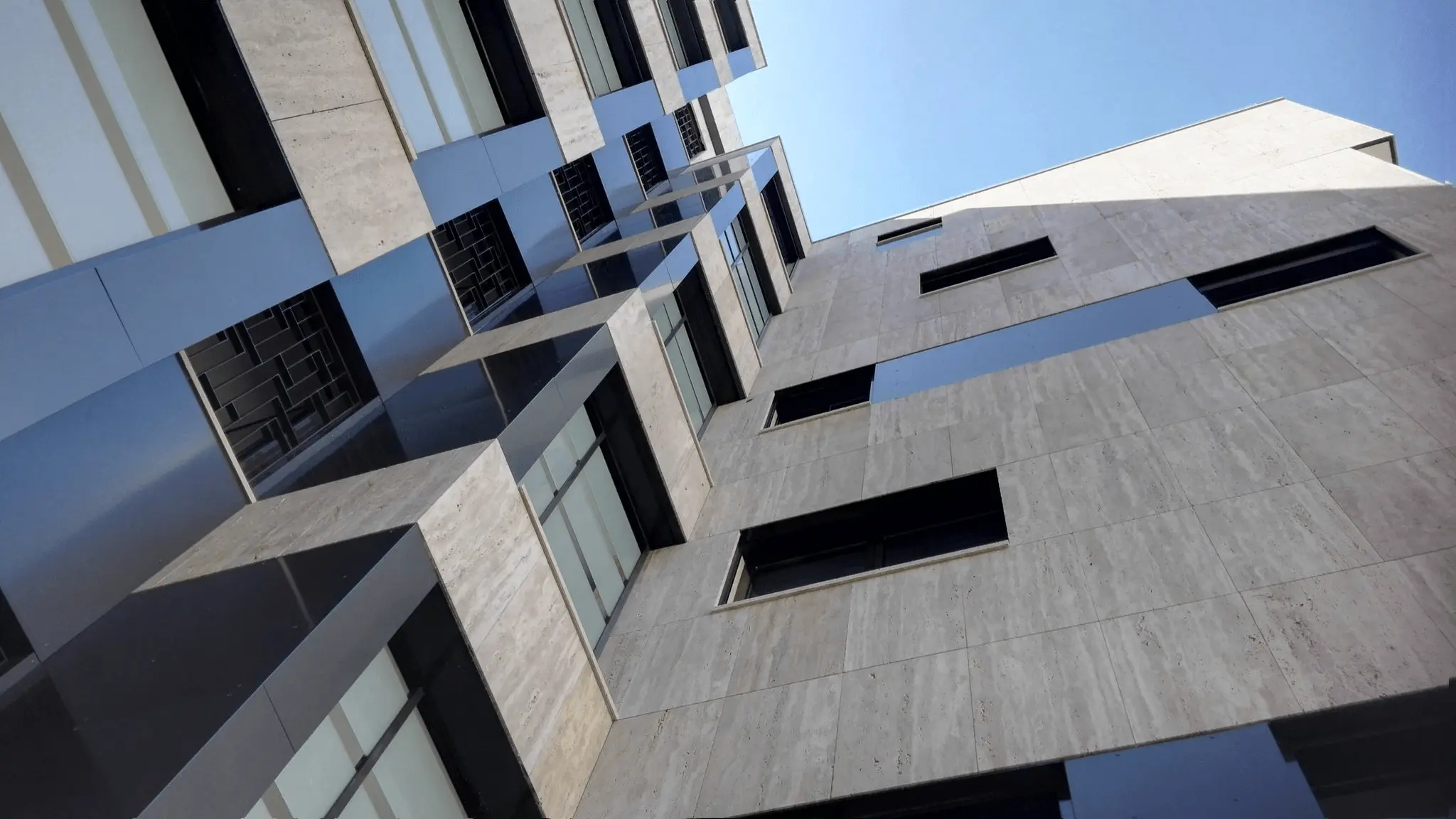
For exterior facades, a honed finish is often selected for a restrained, visually consistent elevation. Polished cladding creates stronger reflections and may make surface variation or weathering more visible. Finish choice must be coordinated with anchoring, exposure, cleaning access, sample approval, and the facade consultant's requirements.
This is where polished travertine excels. On vertical surfaces where slip resistance is irrelevant, the glossy finish maximises colour depth, enhances the stone's natural veining, and creates dramatic light reflections. Polished travertine feature walls in lobbies, living rooms, and compared to marble accent walls deliver a luxury aesthetic that honed finishes cannot match. Since walls receive no foot traffic, maintenance concerns are minimal.
Request matched honed and polished travertine samples to compare colour, sheen, filler and texture before specifying.
Safety Specification
Slip performance belongs to the exact supplied product and its intended use. Use this checklist instead of assigning a generic DCOF or R class to every honed or polished travertine.
| Specification Check | Why It Matters | Evidence to Request | Project Action |
|---|---|---|---|
| Exact supplied finish | Stone, filler and final abrasive sequence can change the surface | Full-size control sample | Approve before production |
| Intended use | Dry, wet, exterior, sloped and contaminated areas differ | Written use conditions | Classify every area separately |
| Interior wet testing | A finish name is not a test result | ANSI A326.3 report for the supplied product | Specifier confirms suitability |
| Exterior wet use | Exterior categories require project-specific evaluation | Manufacturer declaration and local-code review | Do not reuse an interior result |
| European classification | R classes come from ramp testing, not visual appearance | DIN EN 16165 result when required | State the required class |
| Installed system | Joints, slope, drainage and wear affect real use | Site mock-up and maintenance plan | Review stone and assembly together |
| Production consistency | Quarry lot and processing can alter the surface | Approved control sample and QC tolerance | Match production to approval |
| Handover and maintenance | Contamination, cleaning and wear can change traction | Cleaning products, frequency and retest plan | Include in the safety file |
ANSI A326.3 states that a qualifying laboratory value does not make a surface suitable for every project. The specifier must also consider use, contaminants, maintenance, wear, slope and manufacturer guidance.
Technical references
Use the current standard, an accredited test for the supplied product, and the selected care-product instructions when writing the project specification.
Pricing & Maintenance
There is no credible universal price premium or annual maintenance rate for a finish. Compare quotations for the same stone, dimensions, quantity, packing, and destination. Both finishes are available across our travertine collection.
| Cost Factor | What Changes | How to Price It |
|---|---|---|
| Factory finish - Honed | Lower-sheen abrasive sequence | Quote by stone, size, thickness and quantity |
| Factory finish - Polished | Finer abrasive stages and tighter visual control | Request a like-for-like factory quotation |
| Protection - Honed | Depends on absorption, filler and intended use | Test the selected sealer on the control sample |
| Protection - Polished | Depends on stone density, use and appearance target | Confirm compatibility and sheen on a sample |
| Maintenance plan | Cleaning frequency follows traffic and contaminants | Price local labour and approved products |
| Future restoration | Access, wear depth and finish target drive the scope | Obtain a local specialist survey when needed |
Key insight: finish price is only one line in the installed cost. Samples, sorting, sealing, installation, access, cleaning and future restoration can matter more, especially on floors and facades. Compare total scopes, not isolated price-per-square-metre claims.
Marmol Turco quotations are project-specific. Maintenance and restoration are priced locally after the stone, use conditions and installed surface are known.
Our stone specialists can recommend the best finish for your specific application, climate, and budget.
Our Collection
Every travertine below is available in honed, polished, brushed, and tumbled finishes. Click to explore specifications and pricing.
Common Questions
Answers to the most common questions about honed and polished travertine, based on 20+ years of industry experience.
Marmol Turco supplies premium Turkish travertine in every finish -- honed, polished, brushed, and tumbled. Request free samples or a project quote through our stone collection.
Sample availability and quotation timing are confirmed for each stone and project.
Project enquiry
Share the material, format, quantity, destination, and timing.
What helps us answer accurately
Stone · Format and finish · Quantity · Destination city or port
You can expect a reply within
One business day
Need a quick answer? Ask Selim in the chat.

