
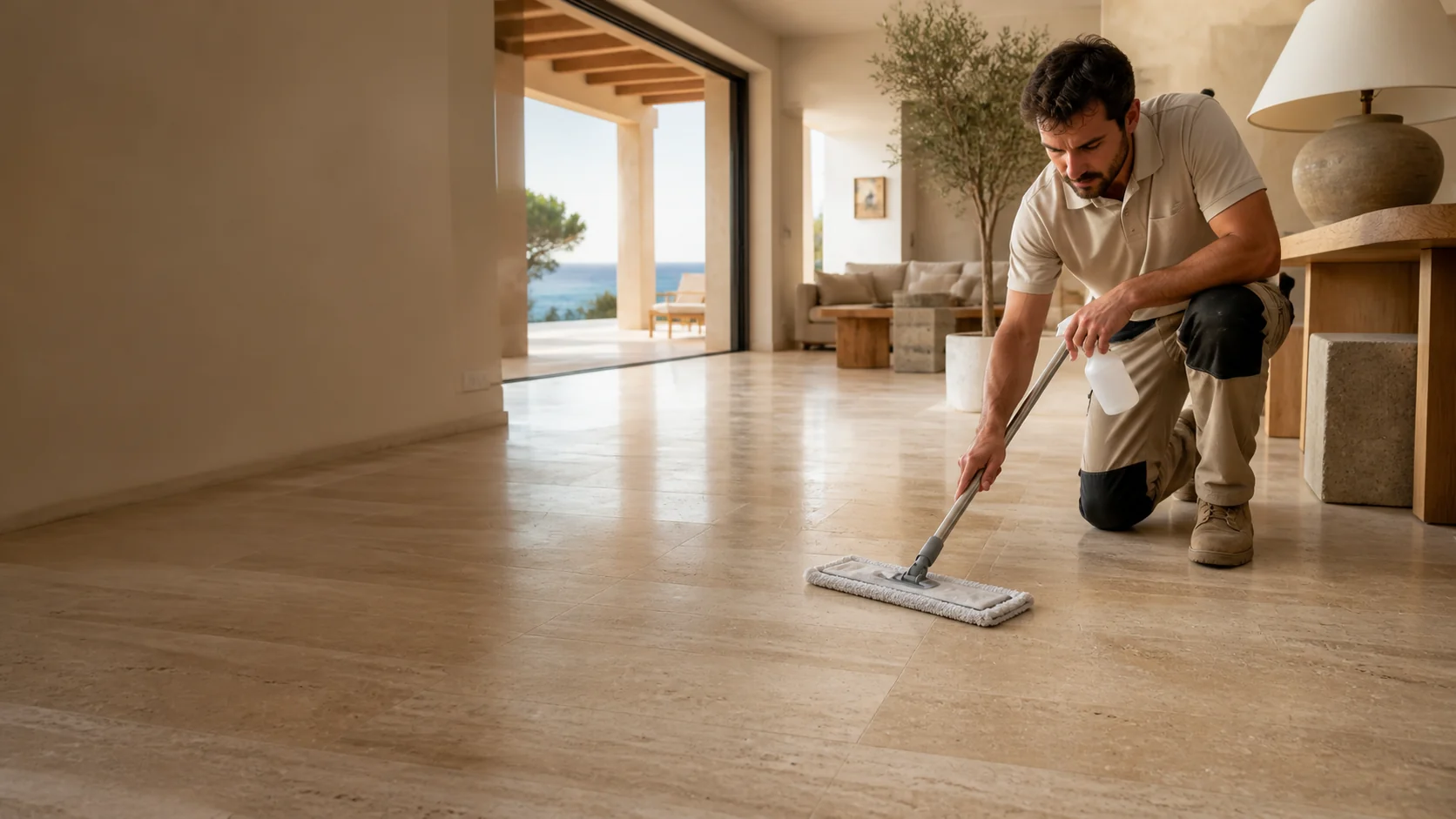
A professional guide to keeping your travertine surfaces beautiful for decades. From daily care routines to deep cleaning and sealing techniques.
Last updated: · Reviewed by Sezai Suda
Quick Cleaning Facts
Daily Care
Consistent daily care is the foundation of travertine maintenance. These simple steps will keep your travertine flooring and surfaces looking pristine.
Start each day by sweeping or dust-mopping your travertine surfaces with a soft, dry microfiber mop. This removes abrasive particles like sand and grit that can scratch the stone over time. Avoid stiff-bristle brooms that may damage the surface.
Use a damp (not soaking wet) microfiber mop with a stone-safe, pH-neutral cleaner diluted in warm water. Wring the mop thoroughly before use. Excess water can seep into travertine's natural pores and cause discoloration or damage over time.
After damp mopping, go over the surface with a clean, dry microfiber cloth to remove any remaining moisture. This prevents water spots and helps maintain the stone's natural sheen, especially important for polished or honed finishes.
Deep Cleaning
For stubborn dirt or periodic thorough cleaning, these professional-grade methods will restore your travertine without causing damage.
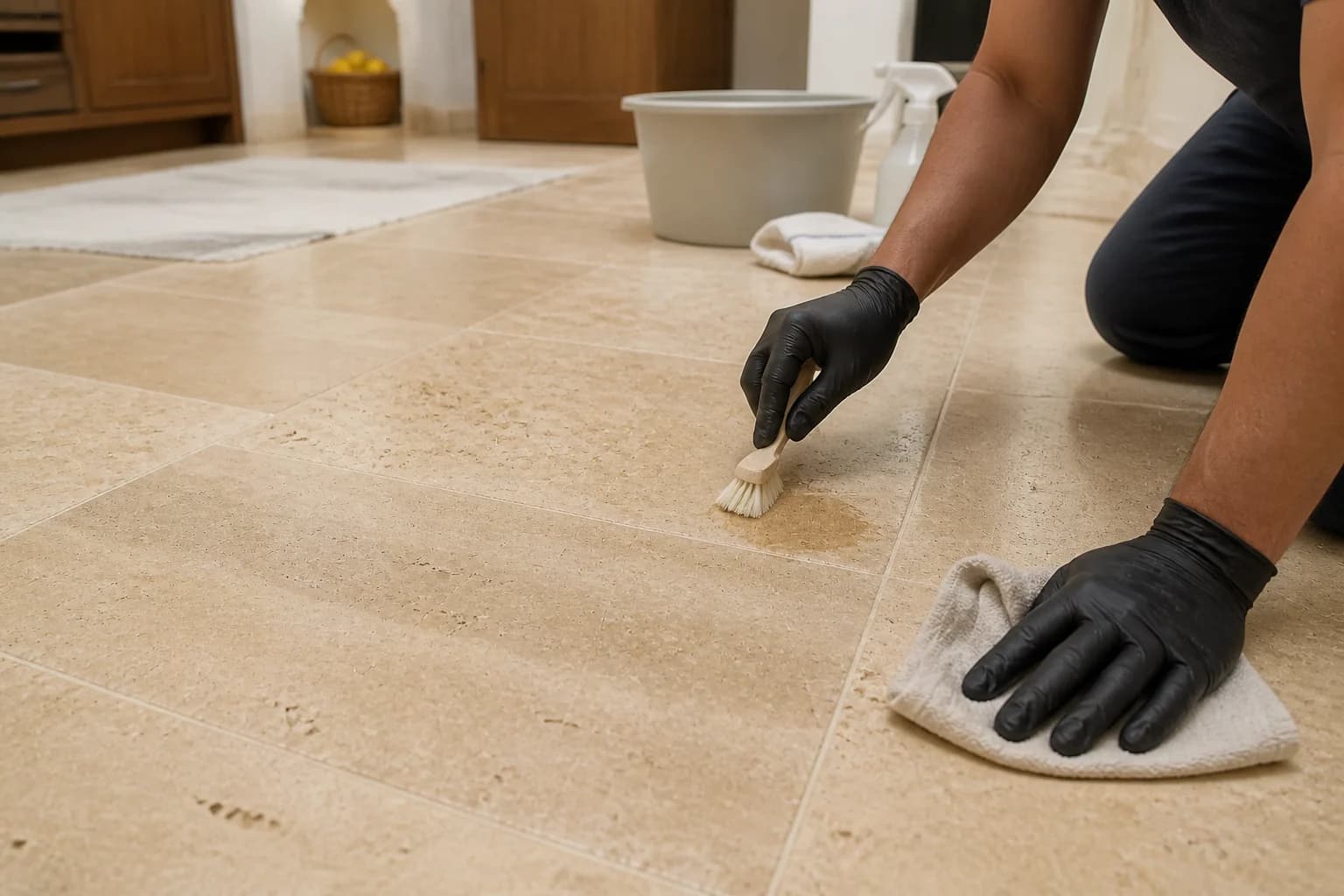
A poultice is a paste of absorbent material (baking soda, kaolin clay, or diatomaceous earth) mixed with a chemical agent. Applied to stains and covered with plastic wrap for 24-48 hours, it draws out deep-set contaminants from the stone's pores.
Professional-grade steam cleaners effectively sanitize and deep-clean travertine without chemicals. The high-temperature steam loosens embedded dirt while being gentle on the stone. Keep the nozzle moving to avoid concentrating heat in one area.
For organic stains (food, coffee, biological matter), enzymatic stone cleaners break down organic compounds without attacking the calcium carbonate in travertine. These are particularly effective for kitchen and bathroom travertine surfaces.
Stain Removal
Different stains require different approaches. This guide covers the most common types and the safest removal methods for travertine.
| Stain Type | Removal Method | Recommended Products | Difficulty |
|---|---|---|---|
| Oil / Grease | Baking soda poultice with acetone | Baking soda, acetone, plastic wrap | Moderate |
| Wine / Coffee | Hydrogen peroxide poultice (12%) | Hydrogen peroxide, flour, plastic wrap | Easy |
| Rust | Commercial rust remover for stone | Stone-specific rust remover (non-acidic) | Hard |
| Hard Water / Calcium | Fine steel wool (#0000) with stone cleaner | Stone-safe cleaner, #0000 steel wool | Moderate |
| Mold / Mildew | Hydrogen peroxide spray, let sit 15 min | Hydrogen peroxide (3%), spray bottle | Easy |
Direct from Turkish quarries to your project
Critical Warning
These common household products can cause irreversible damage to travertine. Avoid them at all costs.
Vinegar, lemon juice, and citric acid dissolve the calcium carbonate that makes up travertine. Even diluted solutions cause etching, dull spots, and permanent surface damage within seconds of contact.
Bleach strips the natural color from travertine and can cause yellow discoloration. Chlorine-based cleaners weaken the stone structure over time and damage any existing sealant.
Scouring powders, steel wool (except ultra-fine #0000), and abrasive pads scratch and dull the surface of travertine. Once scratched, the damage requires professional re-honing to repair.
Ammonia is alkaline and can strip sealant from travertine, leaving the stone vulnerable to staining. Glass cleaners and multi-purpose sprays often contain ammonia.
Sealing Guide
Proper sealing protects travertine from stains and moisture. We recommend sealing every 1-2 years for interior surfaces and annually for pool deck travertine and outdoor areas.
Remove all dirt, stains, and old sealant residue. The stone must be completely clean and dry before sealing. Allow 24-48 hours after deep cleaning for the stone to dry fully.
Use a high-quality impregnating (penetrating) sealer designed for natural stone. Apply with a paint pad, roller, or sprayer in thin, even coats. Work in small sections of 2-3 square meters.
Let the sealer absorb into the stone for 5-15 minutes (check manufacturer instructions). The sealer needs to penetrate the pores to provide protection from within.
Before the sealer dries on the surface, wipe away all excess with a clean, dry microfiber cloth. Any sealer left on the surface will create a hazy, sticky residue.
Most sealers require 24-72 hours to fully cure. Avoid foot traffic and water exposure during this period. Apply a second coat after 2-4 hours for high-traffic or outdoor areas.
Professional or DIY?
Know when to handle maintenance yourself and when to call in the experts.
Our filled and honed travertine requires minimal maintenance
Our Collection
Browse our curated selection of travertine, available in multiple finishes and ready for global delivery.
Common Questions
Answers to the most frequently asked questions about travertine maintenance and care.
Get premium Turkish travertine delivered directly from our quarries. Browse our complete collection or request a personalized quote.
Free quotes within 48 hours. No commitment required.
Project enquiry
Share the material, format, quantity, destination, and timing.
What helps us answer accurately
Stone · Format and finish · Quantity · Destination city or port
You can expect a reply within
One business day
Need a quick answer? Ask Selim in the chat.

