
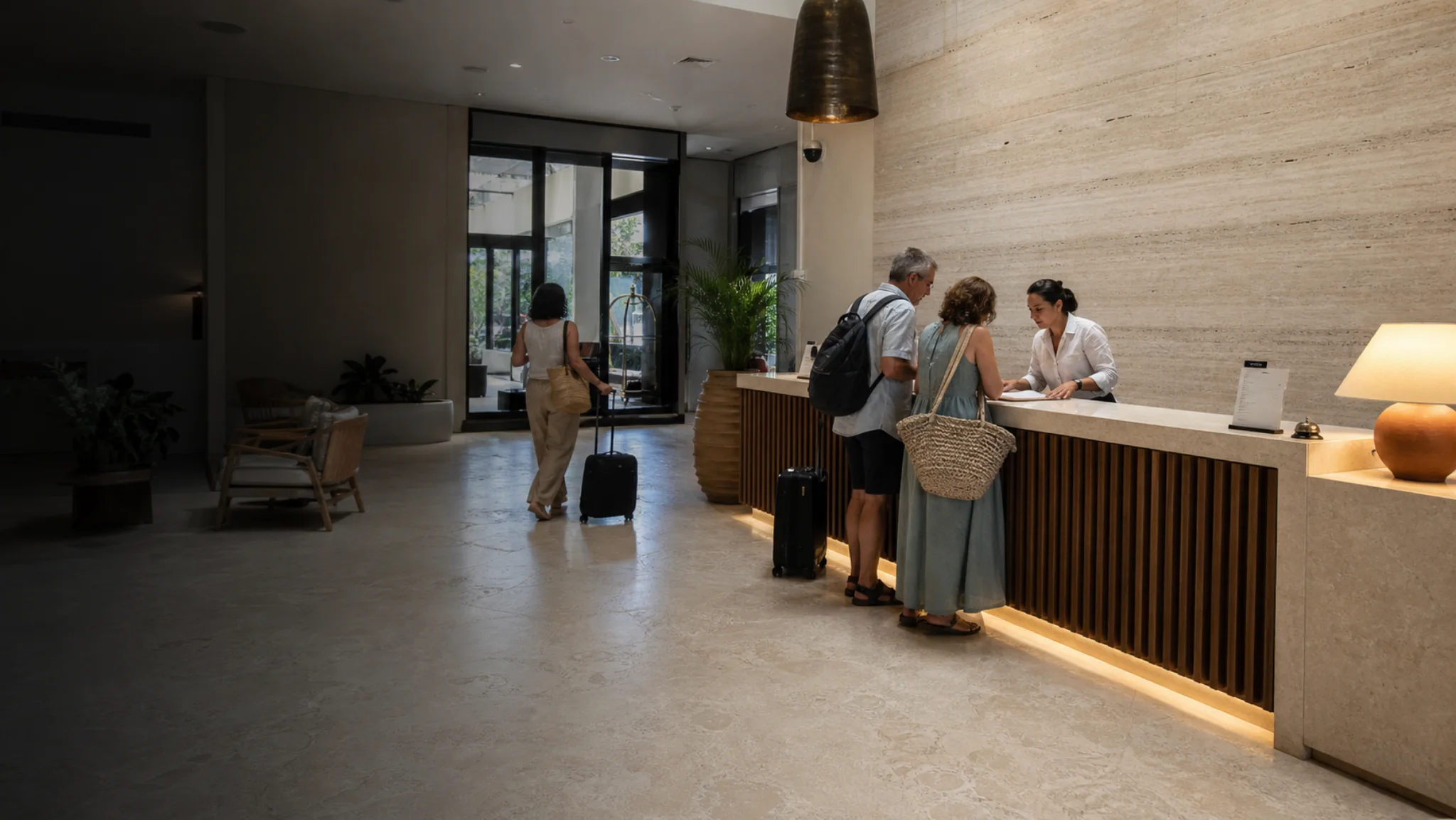
The same travertine block can reveal two very different visual characters depending on cutting direction. This guide shows the pattern, layout, and test evidence to approve before you specify.
20+
Years Experience
40+
Countries Served
2
Cut Directions Compared
100%
Direct from Turkey
Last updated: · Reviewed by Sezai Suda
Quick Answer
Vein cut exposes long, linear bands; cross cut exposes a softer, cloud-like field. Choose the cut for pattern direction, layout, and the approved slab selection — not from a universal claim that one is stronger or cheaper. For structural or exterior work, request current test results for the exact Turkish travertine, thickness, finish, and bedding orientation.
Understanding the Cut
Every travertine block has a geological bedding plane — the direction in which mineral layers were deposited over millions of years. The cutting direction relative to this bedding plane determines the pattern, structural properties, and price of the finished slab. Both cuts originate from the same Turkish travertine quarries.
In a vein cut, the saw reveals the stone's natural bedding in long, directional bands with subtle colour changes across the slab. The result has a modern, flowing character similar to wood grain. Availability, usable yield, and price depend on the block dimensions, quarry selection, slab size, and matching requirements, so compare current offers rather than applying a fixed premium.
In a cross cut, the saw reveals the bedding as circular, cloud-like formations with a softer, non-directional field. This is the familiar organic character used in classic travertine floors and broad surfaces. It is often easier to blend in modular layouts, but availability and price still depend on the specific block, format, selection, and order quantity.
Key Fact
Vein cut and cross cut are NOT different types of travertine. They are the same stone, cut in different orientations. A single quarry block can produce both vein cut and cross cut slabs. The geological composition, density, and chemical makeup are identical — only the visual pattern and certain directional strength properties differ.
Visual Comparison
The cutting direction dramatically changes the visual character of the stone. Understanding these differences is essential for architects and designers specifying travertine for projects where aesthetics are a primary concern.
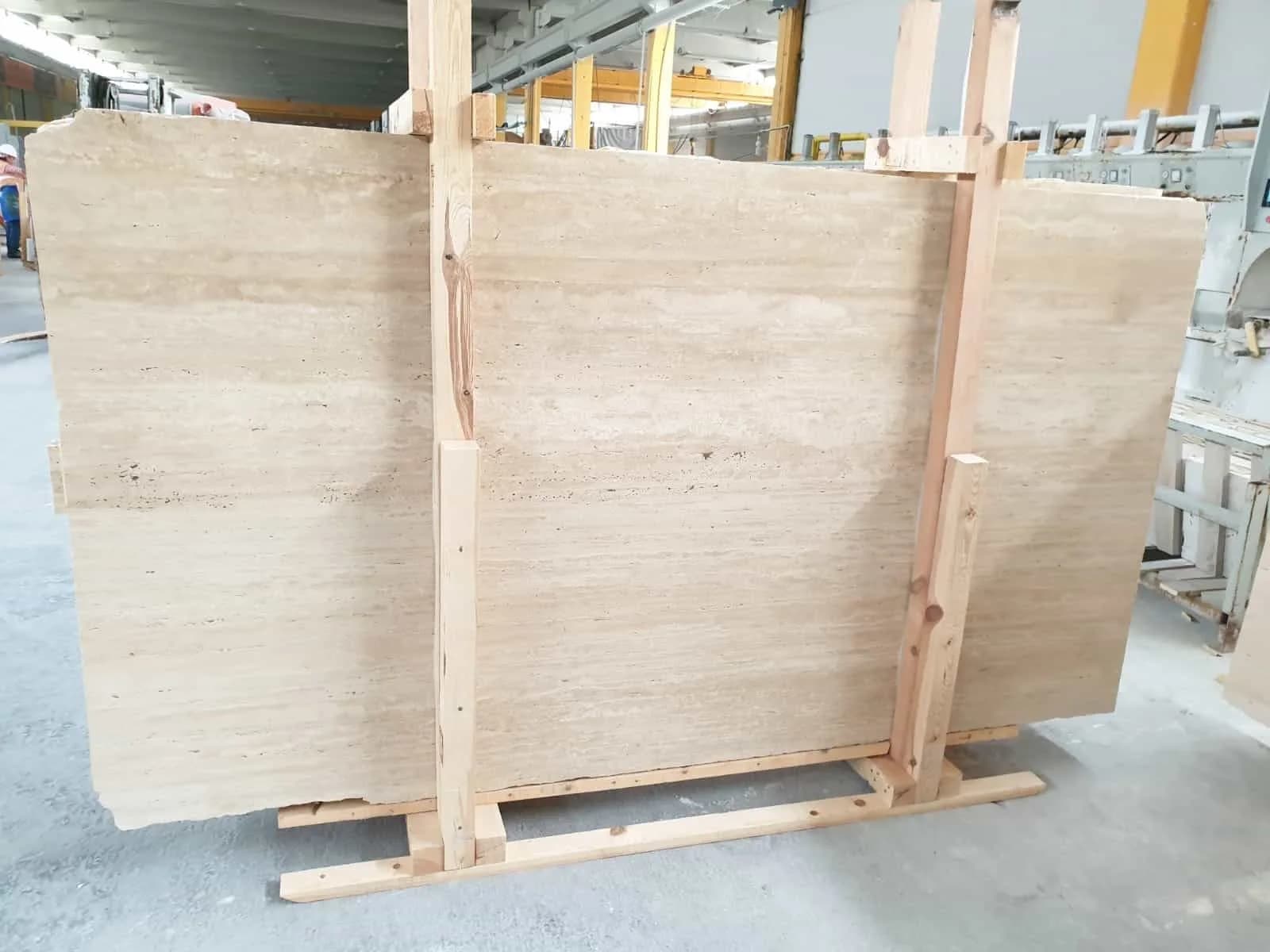
Vein cut surfaces display elongated, parallel lines that flow across the slab in a single direction. This creates a sense of movement, depth, and contemporary sophistication. The pattern is consistent and predictable, making it ideal for bookmatched installations where two adjacent slabs mirror each other to form a symmetrical design. Vein cut works exceptionally well in modern, minimalist interiors where clean lines dominate. Varieties like Classic Travertine and Light Travertine showcase particularly striking vein cut patterns.
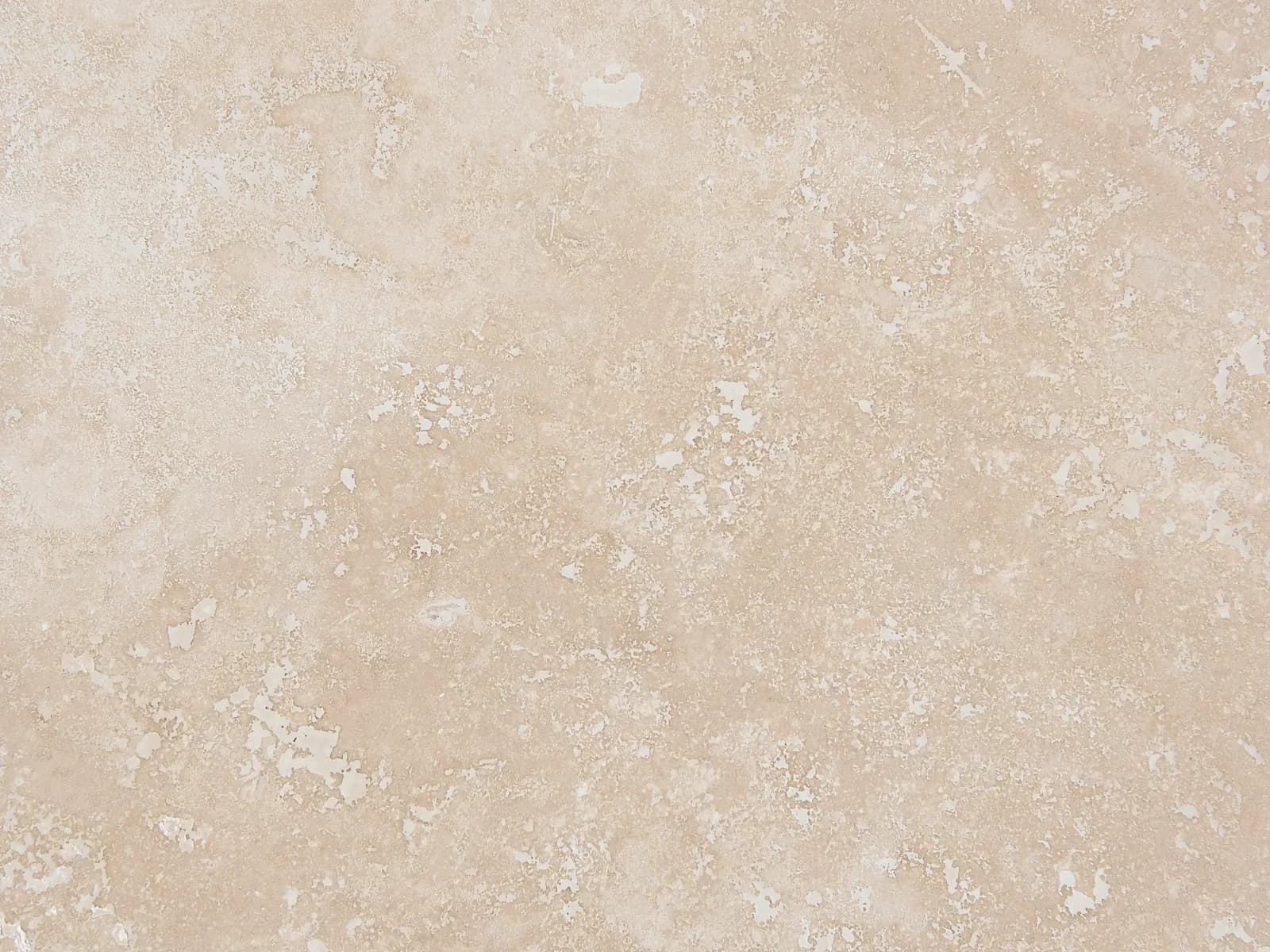
Cross cut surfaces reveal concentric, swirling formations with scattered natural pores that create the unmistakable classic travertine look. The pattern is more varied and unpredictable than vein cut, with each tile displaying a unique arrangement of circular motifs. This organic randomness gives cross cut travertine its warm, timeless character — the same aesthetic seen in Mediterranean villas and ancient Roman architecture.
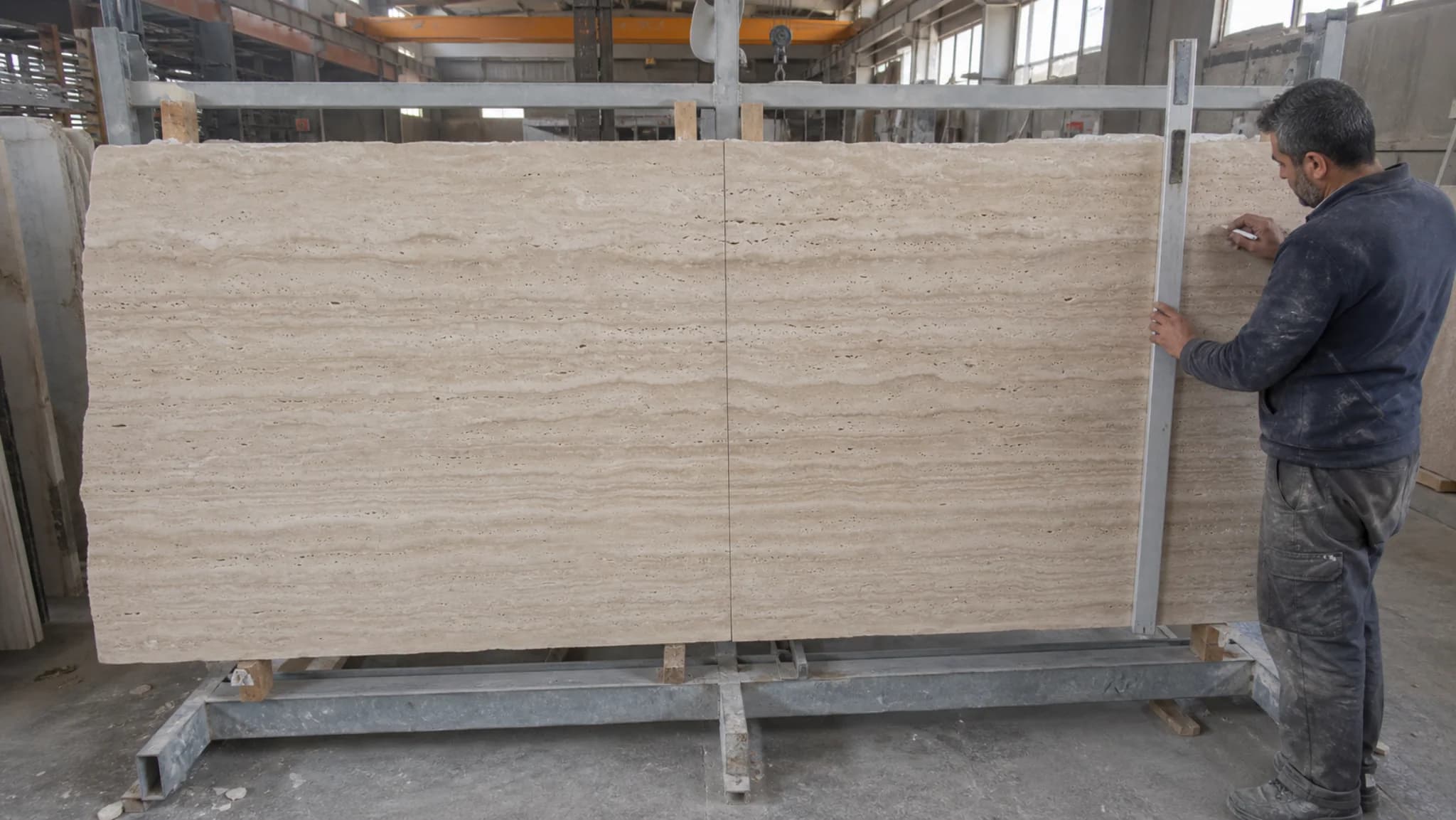
Bookmatching Technique
Bookmatching involves opening two consecutive slabs like the pages of a book, creating a mirror-image pattern across the joint. This technique works best with vein cut travertine because the linear veins produce a dramatic, symmetrical butterfly pattern when mirrored. Cross cut travertine can also be bookmatched, but the circular patterns produce a less defined mirror effect. Bookmatched vein cut installations are a premium specification commonly used for feature walls, reception lobbies, and fireplace surrounds.
Application Guide
The best cutting direction depends on your project's aesthetic goals, structural requirements, and budget. Below we compare vein cut and cross cut across the five most common travertine applications.
Cross cut is often selected for large floors because its non-directional pattern is easy to rotate and blend. Vein cut works well where the layout should create a deliberate visual flow along a corridor or open-plan space. Slip resistance and wear depend on the finish, filling, maintenance, and tested product — not the cut direction alone.
For feature walls, vein cut travertine is the superior choice. Its linear patterns create dramatic visual impact, especially when bookmatched across multiple slabs to form a symmetrical butterfly design. This technique is a staple in luxury hotel lobbies, corporate reception areas, and high-end residential feature walls. The directional grain draws the eye and creates a sense of height when installed vertically.
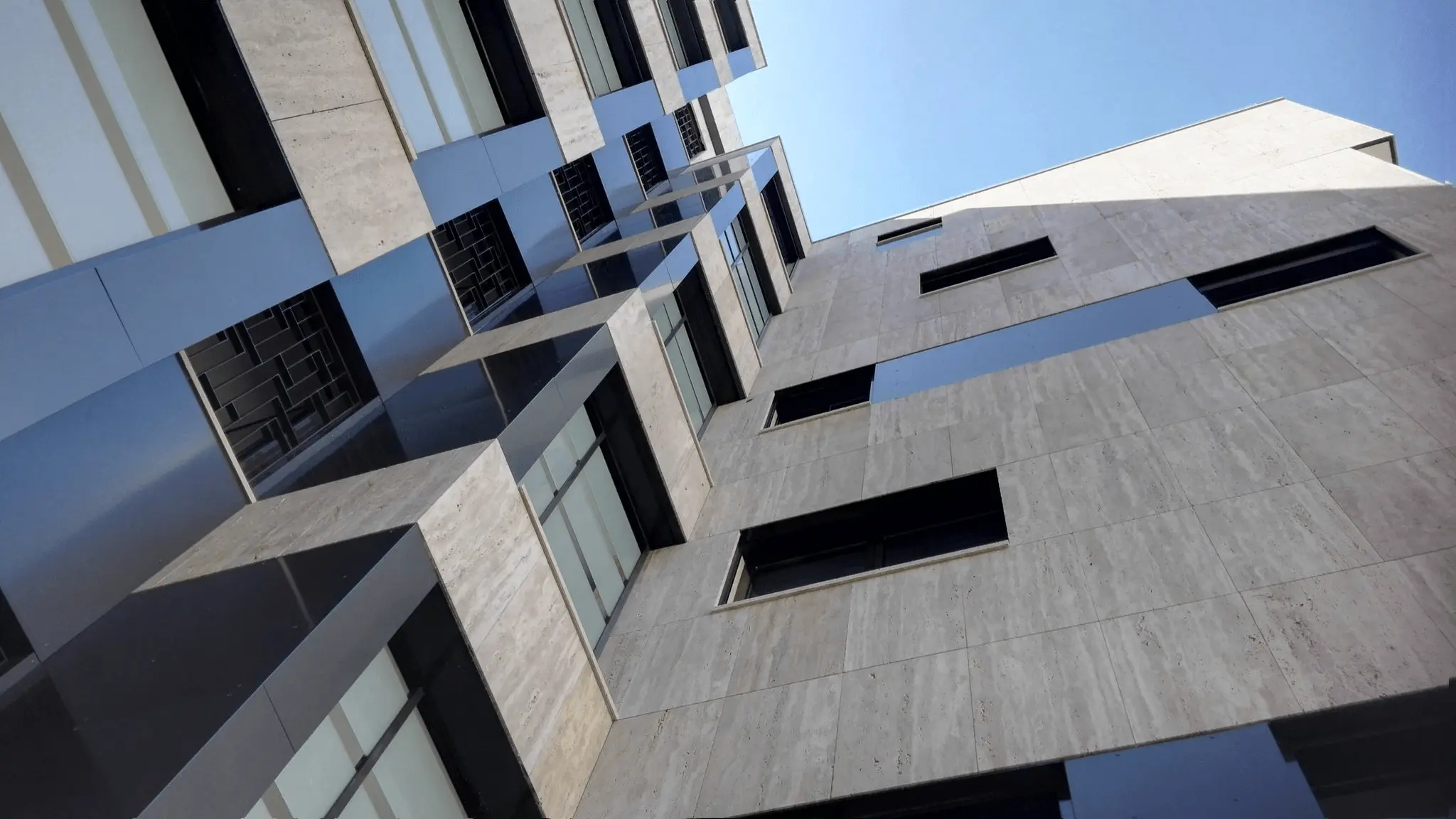
Vein cut is frequently chosen for exterior facades because its linear pattern creates strong architectural rhythm. That is a design preference, not a universal structural advantage. Panel thickness, anchor design, bedding orientation, flexural strength, and anchor resistance must be verified for the exact stone selection by the project engineer.
Cross cut is commonly chosen for pool surrounds and terraces because its organic pattern creates a calm field and can mask visual variation. Wet-area performance depends on the surface finish, whether pores are filled, joint and slope design, sealing, and project-specific slip testing. Do not infer drainage or slip resistance from cut direction alone.
Both cuts can work in bathrooms. Cross cut creates a calmer floor field, while vein cut adds directional movement to walls and vanity surrounds. For shower floors, specify the tested finish, filling, joint layout, slope, waterproofing, and maintenance plan; the visible pore pattern does not by itself prove drainage or slip performance.
Compare the two cutting directions side by side with free samples from our Turkish quarries.
Specification Evidence
Travertine is anisotropic, but research does not support one universal strength winner. Results change with loading direction, porosity, rock fabric, finish, and the quarry selection. Use the table as a certificate checklist, not as generic product data.
| Property | Vein Cut | Cross Cut | Standard |
|---|---|---|---|
| Compressive strength | Test exact selection | Test exact selection | EN 1926 / ASTM C170 |
| Flexural strength | Test exact orientation | Test exact orientation | EN 12372 / ASTM C880 |
| Water absorption | Test exact selection | Test exact selection | EN 13755 / ASTM C97 |
| Pore Visibility (Surface) | Minimal (elongated, subtle) | Prominent (circular, open) | Visual |
| Abrasion resistance | Orientation-dependent | Orientation-dependent | EN 14157 |
Key insight: Bedding orientation can change measured performance, but the direction and size of that change depend on the stone's rock fabric and loading setup. For facade cladding or other engineered uses, approve the exact slab selection and obtain tests in the orientation used by the design.
This table is a specification checklist, not a declaration of values. Request current certificates tied to the quarry, commercial selection, thickness, finish, and test orientation.
Technical sources
Cut direction changes appearance and can influence measured performance, but project values must come from tests for the exact stone and orientation.
Practical Considerations
Beyond aesthetics and strength, the cutting direction affects several practical aspects of design and installation that architects and builders should factor into their specifications.
Vein cut tiles must be laid with careful attention to grain direction. All tiles should run in the same direction, or intentionally alternate for a herringbone effect. Incorrect orientation creates a visually jarring result. Cross cut tiles are more forgiving — their non-directional pattern allows random placement without visible inconsistency.
Vein cut's linear pattern makes grout joints more visible, especially when the lines cross a joint at an angle. Tight joints (1.5-2mm) with colour-matched grout are recommended. Cross cut's organic pattern naturally camouflages grout lines, making it more forgiving with wider joints and standard grout colours.
Vein cut slabs are easier to match across large installations because the linear pattern follows a predictable direction. This makes vein cut ideal for bookmatched feature walls and continuous floor runs where visual flow matters. Cross cut slabs have more variation between pieces, requiring careful selection and dry-layout before installation.
Directional lighting (such as downlights or side lighting) dramatically enhances vein cut's linear texture but can create harsh shadows on cross cut's pore structure. Diffuse, even lighting works better for cross cut installations. Consider your lighting design when specifying the cutting direction, especially for feature walls and backlit applications.
Mixing vein cut and cross cut in the same space is a legitimate design technique when done intentionally. Common combinations include vein cut walls with cross cut floors, or vein cut borders framing a cross cut field. The key is clear delineation — avoid placing both cuts adjacent without a transition strip or change in plane.
Price and availability vary by quarry block, commercial selection, slab or tile format, matching requirements, finish, and order quantity. Vein-cut bookmatched selections can command a premium, but there is no reliable fixed percentage. Request both cuts in the same offer to compare like for like.
Our stone specialists can help you choose the right cutting direction for your project and provide technical data sheets.
Our Collection
Many Turkish travertines can be supplied in vein cut and cross cut, subject to the current block and format. Explore the collection, then request photos and samples from the same commercial selection.
Common Questions
Answers to the most common questions about vein cut and cross cut travertine, based on 20+ years of quarry and project experience.
Go2Stone supplies both vein cut and cross cut travertine direct from Turkish quarries. Request free samples of both cuts to compare in person, or get a detailed project quotation through our stone collection.
Free samples shipped worldwide. Project quotations delivered within 24 hours.
Project enquiry
Share the material, format, quantity, destination, and timing.
What helps us answer accurately
Stone · Format and finish · Quantity · Destination city or port
You can expect a reply within
One business day
Need a quick answer? Ask Selim in the chat.

