
Travertine's natural pores can be left open or filled with resin, cement, or epoxy. Each approach changes the stone's appearance, performance, and maintenance profile. This guide compares both options honestly so you can make the right choice.
20+
Years Experience
40+
Countries Served
Both
Finish Options
100%
Direct from Turkey
Last updated: · Reviewed by Sezai Suda
Quick Answer
Filled travertine has accessible face voids filled with a cementitious or resinous compound and ground flush, creating a smoother surface that is easier to clear of debris. Unfilled travertine retains open face voids and a more textured appearance. Choose by the exact finish, tested wet-slip performance, absorption and climate data, maintenance plan, and installation assembly—not by the label alone. Marmol Turco can provide samples and product-specific documents for both options.
The Basics
All travertine has natural pores and voids formed during its geological creation. The choice to fill or leave these pores open fundamentally changes how the stone looks, performs, and ages over time.
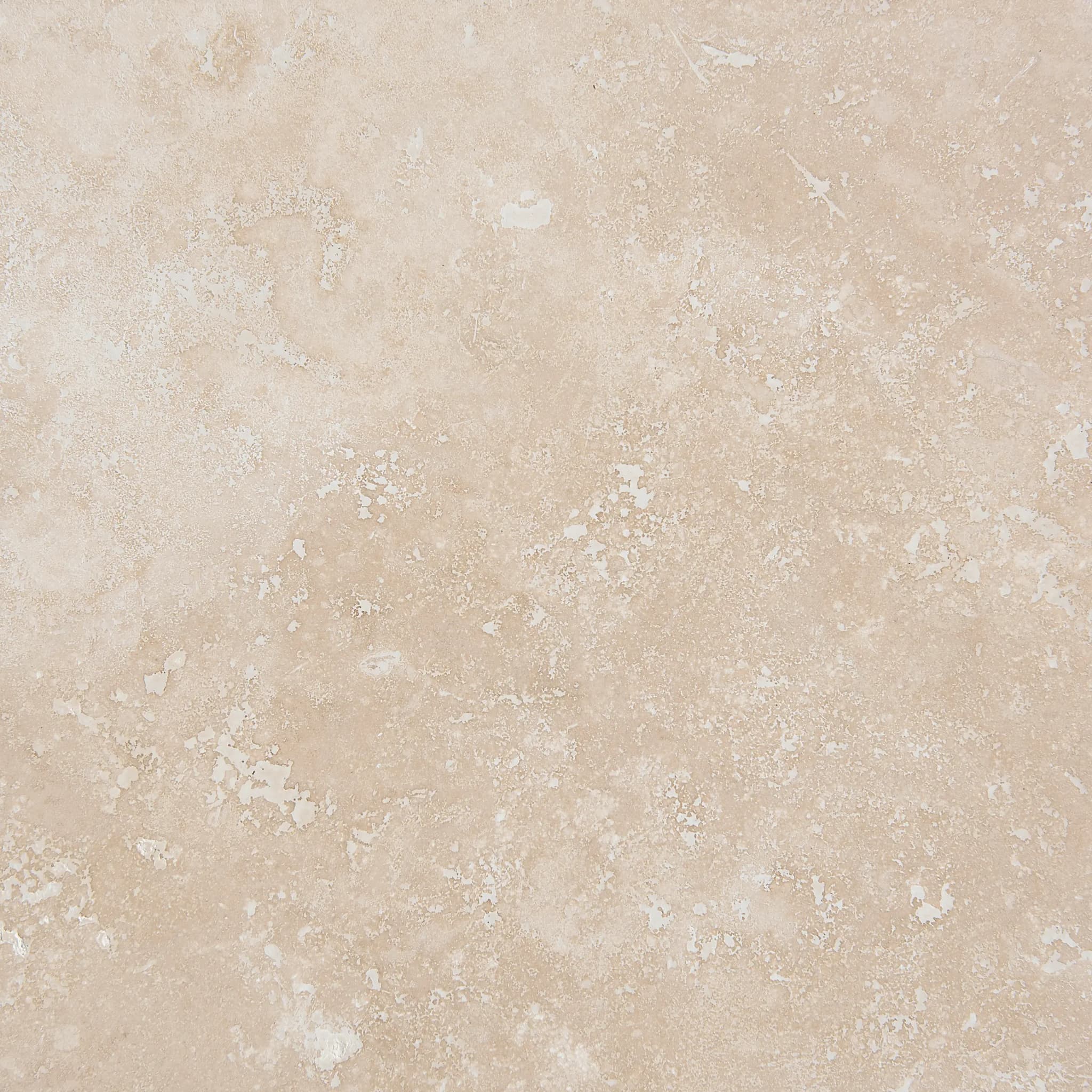
Filled travertine has accessible face voids filled with a cementitious or resinous compound during factory processing, then ground flush and finished. It produces a smoother, more uniform face that is easier to clean, but it does not make travertine nonporous or fill every hidden void. Performance must be verified for the exact stone, filler, finish, and application.
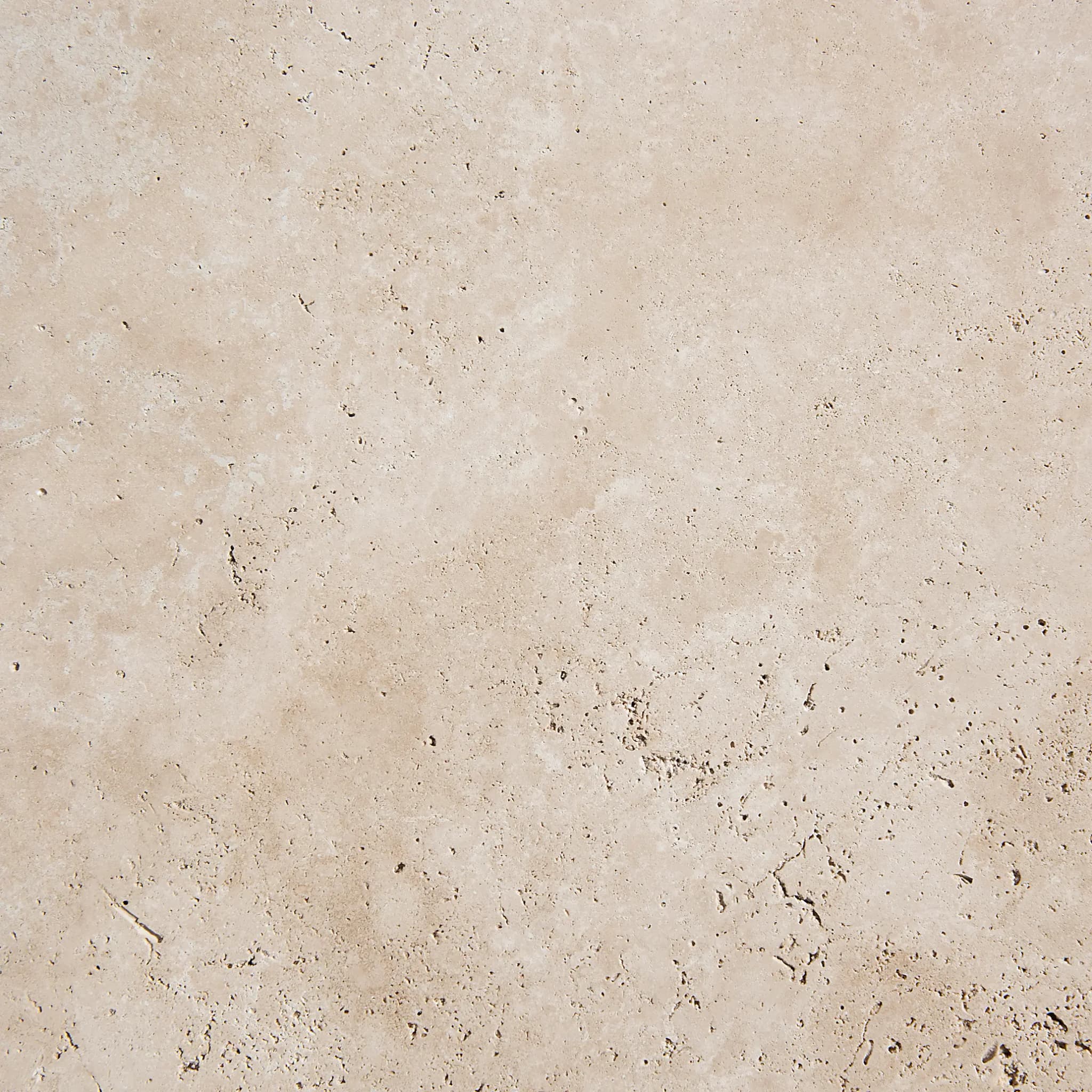
Unfilled travertine retains open face voids after cutting and finishing. The voids create its characteristic texture and rustic appearance, but they can also collect debris and water. Texture may influence grip, yet the unfilled label alone does not establish wet-slip performance or suitability for exterior use; request product-specific testing and detail the drainage and installation system correctly.
How Do the Holes Form?
Travertine forms when calcium carbonate precipitates from geothermal spring water. As the mineral-rich water rises to the surface, dissolved carbon dioxide escapes as gas bubbles. These bubbles create the characteristic pores and channels that define travertine's texture. The size, density, and pattern of these voids vary by quarry and geological conditions, which is why each travertine variety has a unique pore structure.
Side-by-Side Comparison
Understanding how filled and unfilled travertine compare across critical performance factors helps you match the right finish to your application.
Filled
Smooth, uniform surface with minimal visible pores. Honed or polished finish creates a refined, contemporary look.
Unfilled
Natural, textured surface with open pores and voids. Tumbled or brushed finish creates a rustic, organic aesthetic.
Filled
Face filling closes accessible surface voids but does not make the stone nonporous or fill hidden internal voids. Verify absorption for the supplied product.
Unfilled
Open face voids remain visible and accessible. Absorption varies by stone and selection; verify the exact product rather than assuming a generic value.
Filled
Honed or polished filled surfaces are generally smoother. Specify a product-specific wet-slip test for the intended location.
Unfilled
Tumbled or textured surfaces may provide more grip, but open voids are not a slip rating. Request test data for the exact finish.
Filled
Better stain resistance. Sealed pores prevent liquids from penetrating deeply. Spills can be wiped before staining.
Unfilled
Higher stain risk. Open pores allow liquids to penetrate quickly. Requires immediate cleanup and more frequent sealing.
Filled
Clean, refined, modern appearance. Emphasises the stone's colour and veining rather than its pore structure.
Unfilled
Warm, rustic, organic character. The visible pore structure creates the signature travertine look prized in Mediterranean and biophilic design.
Filled
The smoother face is generally easier to clean. Inspect filler and sealer condition; maintenance frequency depends on use, exposure, and the selected system.
Unfilled
Open voids require more deliberate cleaning. Test and maintain any sealer according to its manufacturer and actual exposure.
Application Guide
The right finish depends entirely on where and how the travertine will be used. Below we recommend the best option for six common applications.
For interior flooring, filled travertine is the practical choice. Its smooth surface is easier to clean, resists staining from everyday spills, and provides a refined look that suits contemporary and traditional interiors. Honed filled travertine is particularly popular for living areas and hallways. Varieties like Classic Travertine and Light Travertine are excellent choices for interior floors.
For bathroom walls and vanity surrounds, filled travertine is often easier to clean. For wet floors, do not rely on filled or unfilled naming: specify documented wet-slip performance, compatible setting and waterproofing systems, drainage, and maintenance. Both finishes need product-specific sealing and care guidance.
Textured or tumbled unfilled travertine is often selected for pool decks, but open pores do not replace drainage, correct slope, waterproofing, or a tested wet-slip specification. Verify the exact finish, absorption and—where relevant—freeze-thaw performance for the project climate.
Unfilled travertine can provide the textured, weathered character many patios require, but open pores do not provide a drainage system or guarantee freeze-thaw durability. Specify substrate, slope, joints, installation method, absorption, and climate-appropriate test data for the exact stone.
For exterior facades, filled and unfilled finishes create different visual effects. Suitability depends on stone thickness, anchoring or fixing design, joints, drainage, wind loads, climate, and product test data—not on the face treatment alone.
For countertops and work surfaces, filled travertine is generally easier to clean because accessible face voids are closed. The stone remains porous, so confirm the filler, sealer, food-use maintenance guidance, and resistance to the expected oils, acids, heat, and cleaners on a sample.
Request free samples of both finishes to see and feel the difference before committing to your project.
Filling Materials
Not all filling compounds are equal. The material used to fill travertine pores affects durability, colour matching, cost, and long-term performance. Here is how the three main options compare.
| Property | Resin (Polyester) | Cement (Portland) | Epoxy (Two-Part) |
|---|---|---|---|
| Durability | Depends on the resin formulation, preparation, curing, exposure, and compatibility with the stone. | Depends on mix design, preparation, curing, exposure, and compatibility with the stone. | Depends on the specific two-part system, preparation, curing, exposure, and stone compatibility. |
| Colour Match | Transparent and tinted formulations are available; approve a cured sample against the supplied stone. | Can be colour adjusted; approve a cured sample because tone and ageing may differ from the stone. | Clear and tinted systems exist; approve a cured sample and check expected UV and heat exposure. |
| Cost | Varies by formulation, factory process, quantity, and market. | Varies by formulation, factory process, quantity, and market. | Varies by system, factory process, quantity, and market. |
| Flexibility | Do not infer movement capacity from the generic resin label; request the manufacturer's technical data. | Cementitious fillers are not movement joints; substrate and joint design remain separate requirements. | Properties vary by formulation; request technical data for movement, heat, UV, and chemical exposure. |
| Longevity | No universal service interval. Inspect in use and repair compatible filler as needed. | No universal service interval. Inspect in use and repair compatible filler as needed. | No universal service interval. Inspect in use and repair compatible filler as needed. |
Our recommendation: Do not select a filler by generic material name alone. Review the manufacturer's technical data, a cured colour sample, compatibility with the exact stone and finish, and the intended exposure. Browse our travertine collection and request the relevant factory specification.
Filling material specifications vary by factory. Ask your supplier which filling compound is used and request technical data sheets for project specifications.
Cost & Maintenance
Price and maintenance vary by stone selection, filler system, finish, format, factory process, order size, installation, and market. Compare project-specific quotations for both options.
Filled
Face filling adds factory processing, but the delivered price depends on the full specification. Compare a like-for-like quotation.
Unfilled
There is no face-filling step, but selection, finish, dimensions, packing, quantity, and market can dominate the price.
Filled
Test the surface and maintain any sealer according to its manufacturer, use, cleaners, and exposure. Face filling does not eliminate porosity.
Unfilled
Test the surface and maintain any sealer according to its manufacturer and exposure. Open voids require deliberate cleaning and inspection.
Filled
Standard mopping and pH-neutral cleaners. Smooth surface does not trap debris. Quick, easy maintenance routine.
Unfilled
Requires more careful cleaning. Open pores can trap dirt, grout residue, and organic matter. May need periodic deep cleaning.
Filled
Filling may chip or discolour over decades. Spot re-filling is straightforward and can be done without replacing tiles.
Unfilled
No filling to maintain or replace. Damage is less visible against the natural texture. Easier to refinish uniformly.
Compare delivered material, installation, cleaning, sealer, filler repair, and replacement risk for the actual project. Correct specification matters more than a generic percentage. Request a quote for like-for-like filled and unfilled options.
Our stone specialists can recommend the ideal finish based on your specific application, climate, and design goals.
Specification References
Travertine varies by quarry, cut, void structure, filler, finish, and treatment. Use product-specific samples, declarations, and test reports for the intended application.
Our Collection
Compare available filled and unfilled selections sourced from Denizli. Confirm finish, filler, dimensions, testing, and current availability for your order.
Common Questions
Answers to the most common questions about filled and unfilled travertine, backed by 20+ years of industry experience.
Marmol Turco supplies both filled and unfilled travertine directly from Turkish quarries. Request free samples of each to compare, or get a project quote with finish options through our stone collection.
Free samples ship within 48 hours. Project quotations delivered in 24 hours.

Project enquiry
Share the material, format, quantity, destination, and timing.
What helps us answer accurately
Stone · Format and finish · Quantity · Destination city or port
You can expect a reply within
One business day
Need a quick answer? Ask Selim in the chat.

